Tag Archives: Fiction writing

Boredom and Writer’s Block.

First of all, I could do links in all this to substantiate my words.  But I’m not.  I’ve had migraines off an on for the past six days and am not up to it mentally.  So, google for yourself and if I’m wrong, please comment.  Otherwise, come along and read something fun.

We live in a world of constant mental stimulation. Or maybe it’s just me.  With internet, TV, books, video games, being outside, work, gym, kid, cats, husband, friends, and crafts, I am only  bored in one place, bed.  I was, anyway, until my family teamed up and bought me an iPod touch for Christmas.  Now, even just before sleep, I’m not bored.  It’s my Words with Friends/self-improvement hypnosis time.  Which is both good and bad.

Why both?  Because electronics are infringing upon my “I’m bored but am fretting too much to sleep” time.  It was the one uninterrupted part of my day where I could imagine what if’s based on the day’s information.  Like, what if a couple made a deathbed promise to be married?  What if the one time a bride thought her sister would leave her guy alone, she doesn’t? My latest is what if someone could literally buy the sun?  How would that impact the world’s population?  Another is what if there was a world where eyes evolved in air? And another, how would we communicate with a species who lives in a place where we’d freeze solid? Or instantly burn into vapor?

All of these are fun ideas to ponder.  A few are already books.  What I think a lot of people call writer’s block is actually a lack of being bored.  Lives are so full of distractions, it takes away the time to just daydream and speculate.  We need that time to fill in our own blanks, not let others putty it in for us.

Bottom line? Boredom is not something to be feared.  Instead, it’s a good time to use the quiet to bust up that writer’s block.  There’s not a lot of chances to be bored in a world where even the stores’ checkout lines have televisions. So do yourself a favor and schedule in some daydreaming time and see how much fun your mind can have on its own.

Slacker!

I know, I know! I’d devoted myself to Monday blogging. Tuesday happened, then Wednesday, and at last today. I have a lot of great reasons, but no decent excuses.

So how can I make this a value added post, one that will benefit your life? No idea, except that whole don’t mix colors with your towels is a lie. Unless there’s bleach involved. Then yeah, it’s a bad idea.

What else? I’ve written about showing versus telling when writing a story, so that’d be old news. New news? How about a cool story idea instead. What happens when you thaw an ancient plant? Not much, probably, but what if it were a killer plant? One capable of sentience?

At any rate, here’s the article that started this little germ of an idea.

I’ve been dormant HOW long?

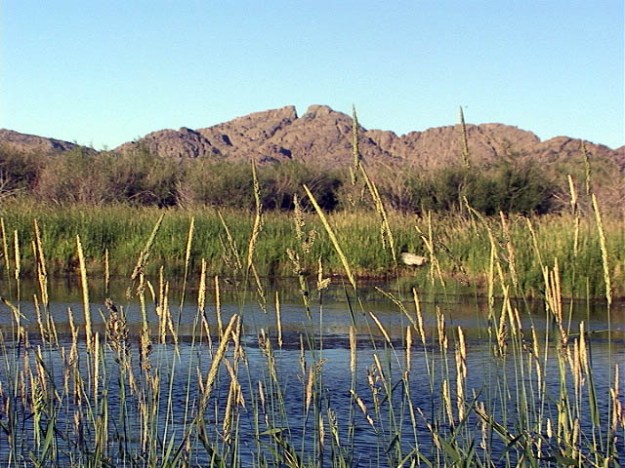
The Only Source of Water on the Trail

Where I am in writing Undesirable is shown in this photo. Lovely, and I wonder how cold is that water? Can you imagine this being your only way to bathe? And in July? It’s too early for this part of the United States to have snow melt runoff raising the water level. That happens in August.

Growing up on a farm with well water helped me appreciate turning on a faucet for clean water. Especially when the electricity would go out and the water pump didn’t work. I’ve not had to melt snow for drinking or to flush the toilet ever while living in town. Even with the well going out at times, we had ways of getting bottled water, something I’m sure the people on the Oregon Trail would appreciate. Every drop they needed had to come from surface water. Have you seen surface water? Mosquito larvae, silt, other little floaty things I don’t even want to know about all are scooped up in a bucket or pail. Plus, people back then didn’t really know about germs. Bathing and drinking were done at the same source. Doing so probably wasn’t as bad as it sounds. People around the world still think of water as magically self cleaning.

Parts of the Oregon Trail had pools of alkali water, poison if too much was ingested by anyone. Thirsty and unruly animals drank with deadly consequences and people not heeding the warnings grew sick as well. Springs of good water occurred among these, causing a trial and error of sorts for the first trailblazers. Later travelers avoided death by heeding the signs and guidebooks’ warnings.

Every time I get clean, cold water from the tap, I think a silent “Thank you!” to everyone who made it possible.

So you’re the touchy-feely type, huh?

Image

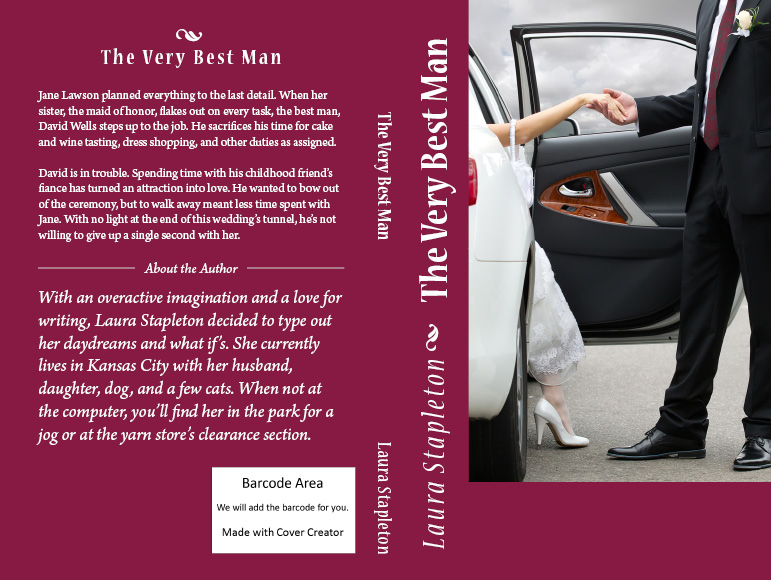
Here you go. The cute little novella, The Very Best Man available in paperback in the next couple of days.  My bet is Wednesday.  It’s a cute, fun, and ‘can you believe this?’ kind of read.  So go, already, poke around in the author’s page I have, check out a sample, see what you think. Then, if you like the sample, you can order the paperback if the smell of ink is your thing.

Is anything ever fast enough?

My idea for this entry was a wa wa about how long it’s taken me to get The Very Best Man out the door and onto Kindle.

I’ve changed my mind.

Instead, I’m posting some writing rules I tend to follow.  I’ve been writing fiction of some sort for the past 22 years and have picked up a few things.  Of course, I’ve not picked up perfect grammar, but that’s why Microsoft’s Word checks for it, now.

1. Show, don’t tell.  Really.  Because when I read a lot of something told to me in fiction, I think “Bla bla bla, get to the good stuff.”  Should I blame the Age of Instant?  Historically, a lot of writers have done this, telling is what happened/is happening versus letting the story unfold before our eyes.  At any rate, during my editing process, telling always gets cut or rewritten.

2. Linking verbs are icky.  Linking verbs are passive. Or, how about, “Avoid the passive and icky linking verbs.”  In a world of CGI and the effects making writing moot, you’ll need to up the voltage on your verbs.  If you can avoid am, is, are, was, were, had, has, could, would, should, and their various had been, could be, should have’s, then do so.  There’s always an exception, though, and passives can be used in a good way.  If your character is a passive person, letting things happen to them, then putting their entire point of view in a passive form is a subtle way of conveying their state of mind without having to tell the reader.  Score one for showing.

3. Point of view.  This is fun and difficult.  I tend to struggle with this at times, being the omnipotent writer and all.  If I’ve done my work and created 3D characters, it’s not so tough to put myself in their place and think their thoughts.  Which is what POV is.  As a writer, you are not yourself in a story, you’re the character.  Is the character you?  Not unless you’re writing an autobiography.  You’ll want your character to be so real that if they knocked on your door, you’d know them instantly.  The problems in POV come from the writer forgetting a character can’t see the blush on her own face.  Another character in the story can’t know the hero’s thoughts unless she’s saying them, or he knows her facial expressions so well he can guess.  Sometimes, I keep a single POV for the entire chapter, sometimes, I divide up the chapter and give it the he says/she says treatment.  One thing to avoid is switching POV’s in the middle of a paragraph.  He’s thinking about the other person and without a paragraph break to let the reader know it, the other person says something.

George looked at Martha.  Her dress, soiled around the hem, clued him in on her morning gardening activities.   “You’ve been busy already.” He smiled at her.  “I’ve picked plenty of okra for dinner tonight,” she said, holding up a basket of greenery.

It’s crude and off the cuff, but my own example.  While not totally confusing, the lack of a paragraph break kicks the reader out of the story and you don’t want that.  Which leads to…

4. Hooks.  You need them.  Even the best written story in the world isn’t going to work if there’s nothing keeping the pages turning.  We’ve evolved past the Me Generation into the What’s In It For Me? mentality.  You need to have a pay off for the reader.  What does this mean?  The protagonist needs a secret, an ultimate goal, a reason to get from point a to point b.  Thanks to the Age of Instant and What’s In It For Me?, hooking the reader in the first five pages is the writer’s goal.  Show us why the hero is keeping a secret, has a goal bigger than himself, or needs to get from a to b.  After that, throw roadblocks/hurdles for him to overcome until the final “no one can survive/surpass this” hurdle.

5. Sex, Violence, and Drama.  Readers love all three.  Look at the top five of any list, movies in theaters, best sellers, even songs, and you’ll see how true this is.  This final point would actually be a really good discussion point.  As much as I’d like to, I have a tough time inserting gratuitous sex and violence into my work, and the drama is somewhat tough, too.  I’d love to hear from other writers who are struggling to keep OUT the three, and readers’ opinions on how much is too much or not enough.